Why South Perry District Spokane Feels Like a Small Town
April 16, 2026
April 16, 2026
Ever walk through a neighborhood and wonder why it feels so familiar, even on your first visit? Spokane’s South Perry District has that effect. If you are looking for a place with walkable blocks, local gathering spots, and a neighborhood rhythm that feels connected, South Perry stands out. Here is why this part of Spokane feels less like a busy city district and more like a small town tucked inside it.
One reason South Perry feels different is that it functions like a real neighborhood center, not a scattered commercial strip. South Perry Together describes it as one of Spokane’s nine neighborhood community districts, with historic homes and buildings, small businesses, churches, nonprofits, shops, breweries, and restaurants all woven together.
City planning materials support that picture. They describe the South Perry neighborhood center as a small, lively retail node surrounded by historic low-density residential neighborhoods, with a pedestrian focus on South Perry Street between East 7th Avenue and East 12th Avenue. That compact layout helps everyday life feel close, convenient, and personal.
South Perry’s small-town feel is not just about appearance. It is also about how you move through the area. According to Spokane’s pedestrian planning documents, the district has higher pedestrian demand because it brings together an elementary school, higher-density housing, a city park, and social services within the same area, along with sidewalk and street tree improvements that support walking.
That matters when you are judging how a neighborhood actually lives day to day. When daily needs and local destinations sit within a few blocks, you are more likely to walk, run into neighbors, and return to the same places again and again.
The heart of South Perry reads more like a neighborhood main street than a typical commercial corridor. The street focus between 7th and 12th creates a defined center, which gives the area a sense of identity.
Instead of feeling spread out, the district feels contained. That kind of scale often makes a place feel more welcoming because you can quickly understand where things are and how they connect.
Part of South Perry’s character comes from its history. Spokane’s historic preservation office notes that East Central was one of the city’s first streetcar suburbs, and historic streetcar lines ran through what is now the South Perry Business District along Arthur, 10th, 11th, and 12th Avenues.
That older pattern still shapes the neighborhood today. It helps explain why South Perry feels like a walkable district with a central business core, instead of a car-oriented strip built around large setbacks and parking lots.
A small-town atmosphere often comes from the places people return to every week. South Perry Together highlights the district’s mix of funky shops, breweries, restaurants, and small businesses, and residents on the organization’s leadership page describe walking to bookstores, coffee shops, restaurants, and parks as part of everyday life.
That is a big part of the appeal if you value neighborhood identity. In South Perry, local businesses are not just places to spend money. They help create routines, chance encounters, and a sense of recognition.
The district’s current mix reinforces that village-center feeling. South Perry Together’s sponsor and partner information identifies Perry Street Brewing as a neighborhood craft brewery and taproom, South Perry Pizza as a community gathering place, and South Perry Lantern as a cornerstone business in the district.
Other nearby partners include Windfall Thrift Store, HICO Market, CHAS Medical Clinic, and Downtown Grocery Outlet. Together, those businesses support both the social side of neighborhood life and the practical side of running errands close to home.
If you want to understand why South Perry feels close-knit, the Thursday Market is a great example. Its current location is at the intersection of 10th and Perry, in the parking lot behind The Lantern and next to Grant Park, and it runs from May through October on Thursdays from 3 p.m. to 7 p.m.
That setting matters because it places the market inside the neighborhood’s walkable core. It is not tucked away from daily life. It sits right where the school, park, and business district overlap, which helps it feel like a natural part of the weekly routine.
The market says its mission is to provide fresh, healthy, locally grown food and locally crafted products, and it is in its 23rd season in 2025. South Perry Together also notes that the market accepts credit, debit, and EBT/SNAP/WIC, which helps make it an accessible neighborhood event.
Long-running weekly events can do a lot for a neighborhood. They create repetition, familiarity, and a rhythm that makes the area feel lived-in rather than transactional.
South Perry’s identity is not built around one big event each year. It comes from a steady calendar of recurring gatherings. South Perry Together’s event calendar includes Pride in Perry, community meetings, Very Scary Perry, and Very Merry Perry, in addition to the Thursday Market.
That kind of event schedule helps neighbors see one another often and in different settings. It creates more face-to-face interaction, which is one of the clearest reasons a place can feel like a small town.
The South Perry Street Fair is another major part of the district’s identity. According to South Perry Together and Thursday Market materials, the fair takes place on Perry Street between 9th and 12th Avenues, draws an estimated 5,000 to 8,000 people, and helps fund district improvements and local nonprofit donations.
Even larger events still connect back to the neighborhood itself. They support local improvements and reinforce the idea that this is a district with active community stewardship, not just a collection of businesses.
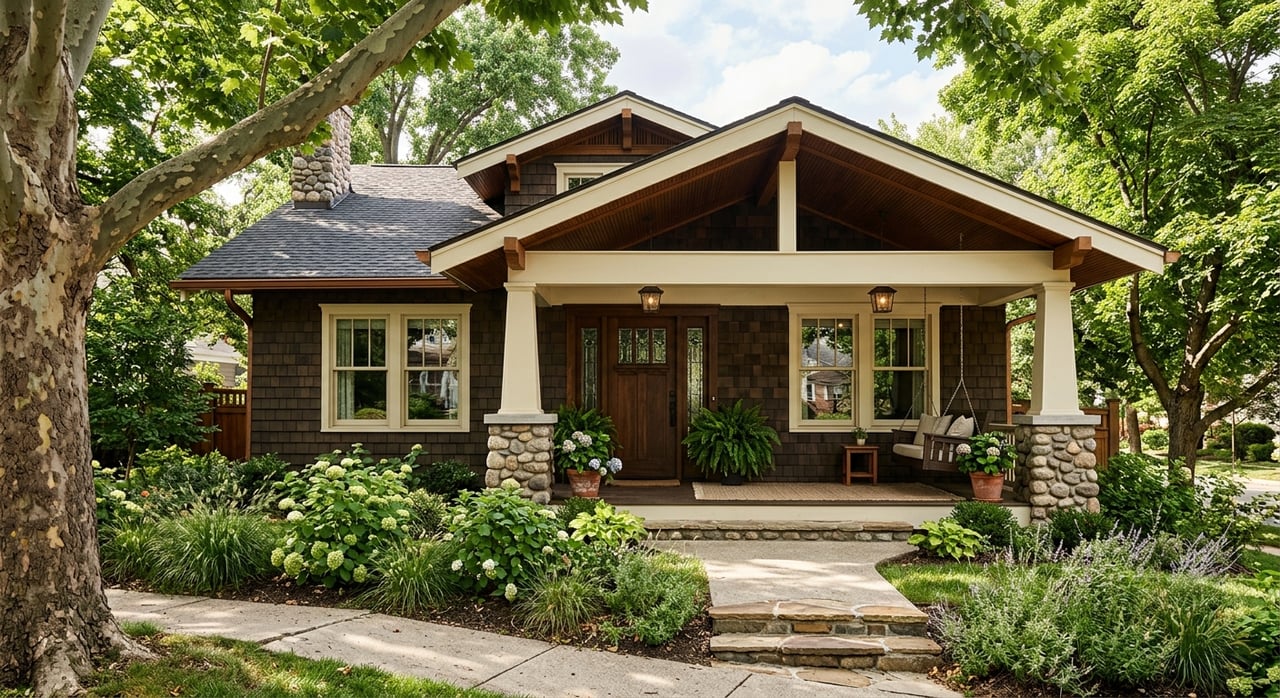
Housing also plays a major role in how South Perry feels. Spokane’s historic preservation office says the city has one of the country’s best concentrations of Craftsman architecture and many bungalow-era homes from the early 20th century.
City planning materials add that South Perry is mostly single-family detached housing with some old and new middle housing, in a pre-war area with an average year built of 1942. That mix gives the district a residential feel that supports its small-scale business core.
This distinction matters if you are comparing Spokane neighborhoods. South Perry is not best understood as a dense urban core. It is better understood as a residential neighborhood with a compact main street.
That balance is a major part of its appeal. You get a sense of place and local activity, but the surrounding blocks still read as established residential streets rather than constant commercial density.
Taken together, the district’s appeal is pretty clear. South Perry feels small-town not because it is isolated, but because it is self-contained. Within a few walkable blocks, you can reach local businesses, community events, park space, and everyday destinations in a setting shaped by historic homes and a long-standing neighborhood center.
For buyers, that can translate into a stronger sense of connection to place. For homeowners, it helps explain why South Perry continues to attract people who want character, walkability, and a neighborhood that feels active without feeling overwhelming.
If you are thinking about buying or selling in Spokane and want guidance grounded in neighborhood detail, Patricia O'Callaghan/SpokaneREAL offers thoughtful, high-touch representation backed by deep local insight.
We pride ourselves in providing personalized solutions that bring our clients closer to their dream properties and enhance their long-term wealth.