Buying Acreage in North Spokane: What to Check First
July 16, 2026
July 16, 2026
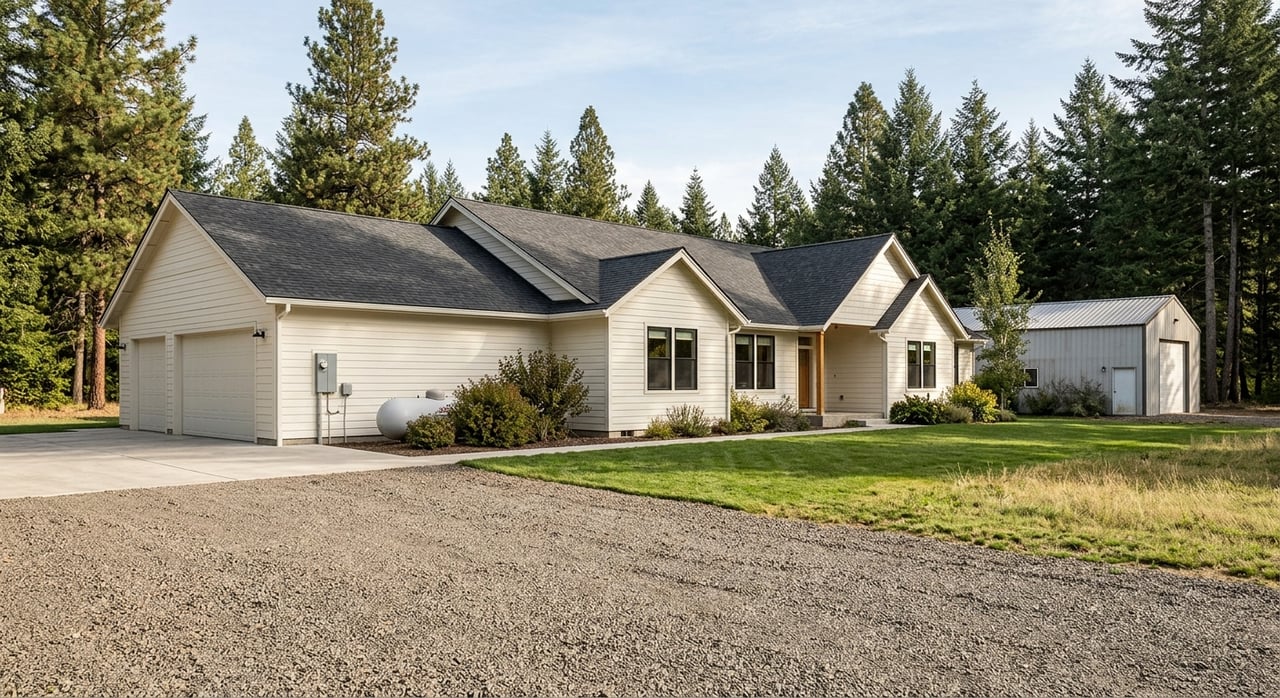
Acreage can feel like the dream upgrade: more space, more privacy, room for animals, a shop, or a future custom home. But in North Spokane, buying land in the 99021 area is rarely as simple as picking the prettiest view or the biggest parcel. If you want to avoid expensive surprises, you need to understand how zoning, access, utilities, and long-term upkeep really work before you write an offer. Let’s dive in.
When you buy acreage in North Spokane, the first question is not just how many acres you get. It is what the parcel is legally allowed to be used for. In Spokane County, rural parcels outside the urban growth area often have limited public services and utilities, and housing is generally built on larger lots unless a different development pattern applies.
That matters because acreage listings often use buyer-friendly terms that are not official zoning categories. A listing might say “hobby farm” or “view property,” but Spokane County uses specific land-use categories like Rural Traditional, Rural-5, Rural Conservation, Large Tract Agricultural, and Small Tract Agricultural. Those labels affect density, allowed uses, and what you may be able to build in the future.
Here is a simple way to think about a few common rural zones:
If you are hoping for animals, outbuildings, or a future homesite, zoning should shape your short list from day one. It also helps to remember that nearby agricultural or forestry uses may bring noise, odors, dust, smoke, insects, machinery traffic, manure handling, or pesticide exposure. That does not make a parcel less desirable, but it does mean rural living comes with tradeoffs you should understand up front.
In 99021, parcel-by-parcel research matters more than broad assumptions about the area. Before you compare listings too closely, verify the parcel boundaries, zoning, tax district, and whether the property is in unincorporated Spokane County. County rules can differ depending on jurisdiction, so this check should happen early.
Acreage buyers should review Spokane County’s SCOUT parcel map, assessor parcel information, and tax district maps as part of early due diligence. This step can help you spot mismatched boundaries, odd lot shapes, split zoning, or other issues that are easy to miss from listing photos alone.
A beautiful parcel is much less appealing if legal or physical access is weak. Many rural properties in Spokane County are served by private roads, and Spokane County does not maintain private roads. That means the condition, width, maintenance obligations, and year-round usability of a road can directly affect your cost of ownership.
Some roads may be unpaved. Some county roads are considered summer roads. Some public rights-of-way are undeveloped. If you are buying in winter, it is also worth knowing that snow berms at driveways are the property owner’s responsibility.
If you plan to build, access becomes even more important. Large construction vehicles may not be able to navigate narrow or unimproved roads, so you will want to confirm construction access before closing, not after.
If access depends on a private road or easement, ask for the recorded documents early. Spokane County requires private-road easements and maintenance agreements to meet county standards and be recorded before final subdivision or segregation.
This is one reason survey and title review matter so much on acreage. If the driveway does not line up with the legal description, or if a fence line looks questionable, those are not small details. They are early warning signs that deserve attention before you move forward.
On larger parcels, boundary assumptions can get expensive. A fence line may not match the deed. A driveway may cross another parcel. An old legal description may be hard to interpret without expert help.
Washington’s property description standard requires a deed description to be clear enough for a land surveyor to locate the property. If there is any confusion about the lot lines, access route, or legal description, bringing in a surveyor and title company early can save you from a major problem later.
On a subdivision lot, utility questions may be fairly straightforward. On acreage, they can become one of the biggest parts of your decision.
Spokane County is not a water purveyor, so you should first determine whether the parcel is served by municipal water or a private well. Some rural properties depend on private water systems rather than public service, and that difference affects cost, maintenance, and your path to a building permit.
If the property uses a private well, keep in mind that the owner is responsible for that well once it is established. Spokane Regional Health District performs some new well inspections and water adequacy reviews before building permits are issued for projects using a private water system.
Water quality matters too. SRHD recommends testing private well water because some Spokane County wells have had elevated uranium or arsenic, and some wells in the northeast West Plains have shown PFAS. If a parcel relies on a private well, testing should be part of your diligence, not an afterthought.
Septic is just as important as water. SRHD issues permits for new on-site sewage systems and changes to existing systems, inspects them, and renews permits on either a one-year or three-year cycle depending on the system type.
For you as a buyer, that means the septic system’s condition, permitted design, and maintenance history are part of the property’s real operating costs. A large parcel does not automatically mean an easy septic solution, especially if site conditions are challenging.
One of the biggest acreage mistakes is assuming that more land means more flexibility. In reality, the usable or buildable area may be much smaller than the total parcel size.
Spokane County notes that wetland buffers can range from 25 to 200 feet. Fish and wildlife habitat buffers can range from 25 to 250 feet. Geohazard rules regulate slopes of 30 percent or greater, and critical aquifer recharge areas may limit certain uses to protect groundwater.
If the parcel is in or near a mapped floodplain, a floodplain development permit may be required. For view properties or parcels with dramatic terrain, this can become a major issue because slope, buffers, and environmental constraints may shape where you can actually place a home, driveway, shop, or barn.
For wooded parcels or properties near forested areas, wildfire risk should be part of the conversation early. Washington’s Department of Natural Resources has a statewide wildfire hazard and risk mapping effort designed to support planning and mitigation.
That does not mean a wooded parcel is off the table. It means long-term acreage ownership should include realistic planning for defensible space, access, insurance considerations, and seasonal maintenance.
Acreage buyers often picture a workshop, detached garage, barn, or storage building. Spokane County does allow accessory uses and structures ordinarily associated with a permitted use in rural zones, and the county permit portal lists permits for residential accessory structures, grading, septic-related work, and other improvements.
Still, do not assume every existing outbuilding was properly permitted or placed. Before closing, review setback issues, utility access, and permit history for any major accessory structure. That is especially important if the building will be central to how you plan to use the property.
Purchase price is only part of the story. In many cases, the bigger ownership costs show up after closing.
Private roads and driveways need annual maintenance. Unpaved roads may require dust and drainage planning. Snow berms at the driveway are the owner’s responsibility. Land management can also become part of routine ownership, including weeds, drainage, and general site upkeep.
If you are moving from a traditional neighborhood lot to acreage, this shift is worth taking seriously. More land can bring more freedom, but it usually also brings more responsibility.
Some acreage in Spokane County may be enrolled in current-use or open-space programs. These programs allow qualifying farm, timber, and open-space land to be valued at current use rather than highest and best use.
That can affect your tax picture, and a future change in use may have consequences. If a parcel you like appears to have special tax treatment, verify that status early so you understand the real cost of ownership before you close.
Acreage is not valued the same way as a typical suburban home. Comparable sales are often fewer and more varied.
That challenge shows up in local market data. Spokane REALTORS’ March 2026 report showed just 13 closed sales countywide in the separate 1-to-5-acre resale category that month. With a thinner pool of comparable properties, pricing and appraisal discussions often require a more specialized, local lens.
The right property team can help you sort through acreage details before they become expensive problems. Depending on the parcel, these professionals may be worth involving early:
If you are seriously considering acreage in North Spokane, start here:
Acreage can be one of the most rewarding property types to own in Spokane County, but it rewards buyers who do their homework. The more clearly you understand the parcel before you buy, the more confident you can feel about what that land can actually do for you.
If you are exploring acreage in the 99021 area and want a grounded, local perspective on value, due diligence, and fit, Patricia O'Callaghan/SpokaneREAL can help you evaluate the details with care.

We pride ourselves in providing personalized solutions that bring our clients closer to their dream properties and enhance their long-term wealth.