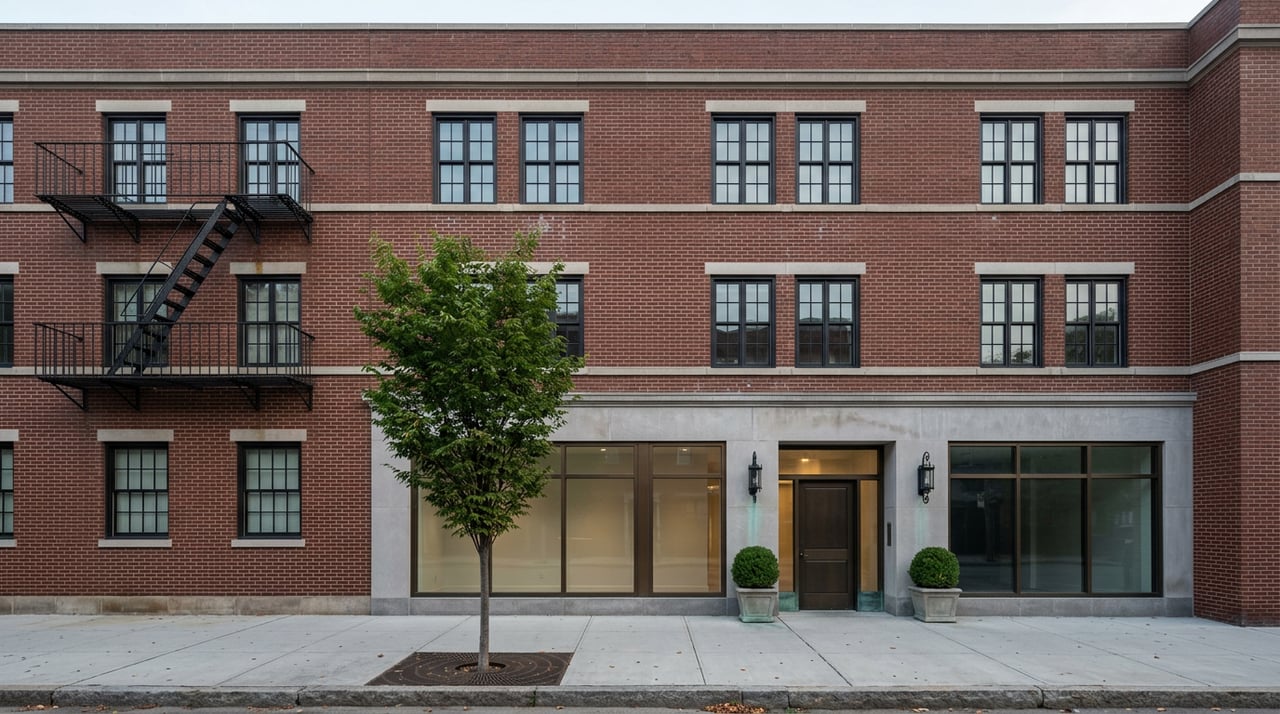
Understanding the Downtown Spokane Condo Market
August 27, 2026
August 27, 2026
"I wouldn't say it out loud, but I think we're starting to see just a hair of a dip."
She was describing what she's seeing in the field this year. Her comment ran alongside the Spokane County Assessor's June 2026 report, which found that downtown apartment complexes lost more than 5 percent of their assessed value and downtown office buildings fell more than 4 percent, continuing a multiyear slide that Assessor Tom Konis's office has now tracked for several cycles running.
If you're shopping for a condo downtown, that headline should make you nervous. It shouldn't. The assessor's numbers describe a different market than the one you're buying into, and mixing the two up is the fastest way to misprice a downtown purchase or a downtown listing this year.
The county's June assessments, mailed June 1 for 2027 taxes, are built off values as of January 1, 2026. Those numbers cover income-producing property: large apartment complexes and office towers valued the way a lender or an investor would value them, based on occupancy, rent rolls, and what the building would fetch as a whole asset. Downtown's office vacancy problem, which has now dragged office valuations down for multiple years running, is the kind of trend that shows up cleanly in that math. So is softening demand for large rental apartment buildings, which the assessor's office grouped with the office decline in its report.
None of that describes how an individually owned condo unit gets priced. A condo isn't valued as a slice of a rent roll. It's valued the way any single-family home is, unit by unit, against recent comparable sales. And that's where the second number comes in.
A snapshot of downtown Spokane condo listings from May 2026 put the median sale price at $415,000. The average sale price for the same pool of listings was $735,883, and condos were taking an average of 64 days to sell, longer than the national average of 58.
A median that far below the average is not a rounding quirk. It means a small number of very high sales are pulling the mean upward while most transactions cluster well below it. That's the signature of a market with a long tail, not a market that's uniformly expensive or uniformly soft. Downtown Spokane condos aren't one product trading at one price level. They're at least two products sharing a zip code.
The long tail is made of specific buildings, not statistical noise. A few examples make the pattern concrete.
None of these are apartment buildings competing on rent per square foot. They're one-off, individually deeded units competing on scarcity and design, in a downtown that doesn't produce many of them in a given year.
The mechanism here is straightforward once you separate the two asset types. An office building's value depends on how much rent it can collect from tenants who increasingly don't want downtown office space, a pattern that isn't unique to Spokane and that city centers nationally have been absorbing since the pandemic reshaped commuting. An apartment complex's value depends on similar logic: occupancy, rent growth, operating costs. Both are priced like businesses.
A condo in the Ridpath or the Minnesota Building isn't priced like a business. It's priced like a house that happens to be stacked on top of other houses, and the buyer isn't underwriting a rent roll, they're underwriting whether they want to live there. When there are only a handful of comparable units in the entire city, each sale can move the average without moving the broader market at all. That's exactly what a $2.25 million sale does to a downtown average built on a small number of annual transactions.
This is also why the 64-day average time on market matters. Thin comps make appraisals harder. When a lender's appraiser can't find three recent sales of a similar unique unit, the deal slows down while everyone works out what the property is actually worth, which is a different kind of friction than a soft market.
If your unit sits in one of downtown's larger, more generic condo buildings, comp it against similar buildings and expect the assessor's broader downward pressure on downtown property values to be part of the conversation with buyers, even if it technically applies to a different asset class. If your unit is one of the scarce, architecturally distinct properties, the median is close to useless as a pricing tool. You're not competing against the blended downtown average. You're competing against the two or three other buildings in the city that offer something similar, and your marketing needs to say so explicitly rather than let a buyer's agent anchor on a generic downtown number.
Ask which of the two markets you're actually shopping in before you get attached to a comp sheet. A unit in an older, self-managed building may also be working through Washington's phased-in condo law changes. The Washington Uniform Common Interest Ownership Act began applying certain reserve study and disclosure requirements to every existing community, regardless of formation date, starting January 1, 2026, with fuller coverage arriving by January 1, 2028. An underfunded reserve study in an older building can complicate financing and is worth asking about early, particularly if you're eyeing one of downtown's historic conversions rather than newer construction.
If you're chasing a scarce, one-of-a-kind unit, budget extra time for closing. Appraisers need comparable sales, and in a market this thin, finding them takes longer than it would in a typical suburban subdivision.
If my downtown building's assessed value fell, does that mean my condo lost value too? Not automatically. The county's assessment reflects value as of January 1 and by its own description tends to run lower than what a property would actually fetch on the open market. The steep declines reported this year were concentrated in apartment complexes and office buildings valued as income property, not in individually owned condo units, which are priced against recent comparable sales rather than rent rolls.
Should I worry about financing if I'm buying into one of downtown's historic conversion buildings? It's worth checking early. Washington's newer condo and HOA law is being phased in through 2028, and older associations that haven't updated their reserve studies can run into lender pushback. Ask for the building's current reserve study and resale packet as soon as you're seriously considering an offer.
How do I figure out which submarket a specific downtown building belongs to? Compare recent sales in that specific building or its closest architectural peers, not the downtown-wide median or average. A blended number across dozens of very different buildings won't tell you much about what your unit, or the one you want to buy, is actually worth.
Downtown Spokane's condo market rewards buyers and sellers who know which of its two stories they're standing in. If you want help reading a specific building against the right comps, or a marketing plan that positions a scarce unit the way it deserves, SpokaneREAL is a good place to start that conversation. Schedule a private market consultation and we'll walk through what your building's numbers actually mean.
This article is general information, not legal, tax or financial advice. Consult a qualified professional about your situation.
We pride ourselves in providing personalized solutions that bring our clients closer to their dream properties and enhance their long-term wealth.